In this guide
The short answer
Lessons learned capture useful knowledge from experience. A retrospective turns reflection into ways to improve future work. Both are valuable when you connect observations to an action, owner, and follow-up. A document full of complaints does not improve the next delivery by itself.
Learn while the experience is still useful
You can collect lessons throughout a project rather than waiting until closure. A pilot, milestone, incident, or repeated handoff may reveal something another team needs now. Share the relevant learning while it can still change a decision.
In Scrum, the Sprint Retrospective gives the Scrum Team a regular opportunity to inspect how it worked and improve quality and effectiveness. It has a different purpose from the Sprint Review, which examines the product outcome with stakeholders and informs future adaptation. Keeping these conversations distinct helps each produce a useful result.
Start with observations, not blame
In an original project, three review packages arrived late. Saying reviewers don't care turns an observation into a personal judgment. A better starting point is that each package reached the reviewer after the agreed review window and contained unresolved version differences.
Ask what happened before the handoff. Perhaps the team did not know which version was final, or the reviewer was unavailable. Compare records and listen to the people involved. You need enough understanding to choose an improvement, not a courtroom investigation of every mistake.
Use a simple review format
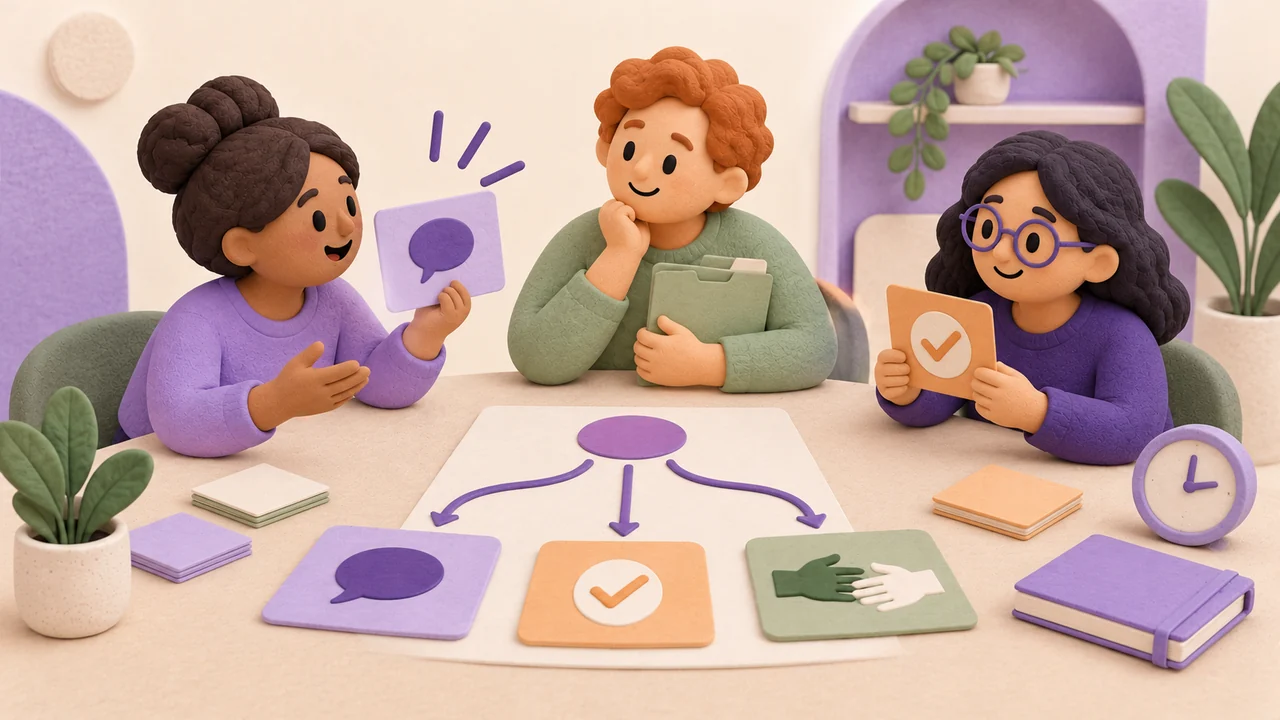
Keep the discussion focused on specific work and practical learning. A small group can walk through these prompts and record the useful decisions. Make room for what worked as well as what caused difficulty.
- Describe the event or pattern using a concrete example.
- Explain the effect on quality, delivery, cost, or the team.
- Explore the contributing conditions and assumptions.
- Choose one improvement the team can realistically test.
- Name an owner and a review point, then share the learning with the right people.
Run one small experiment
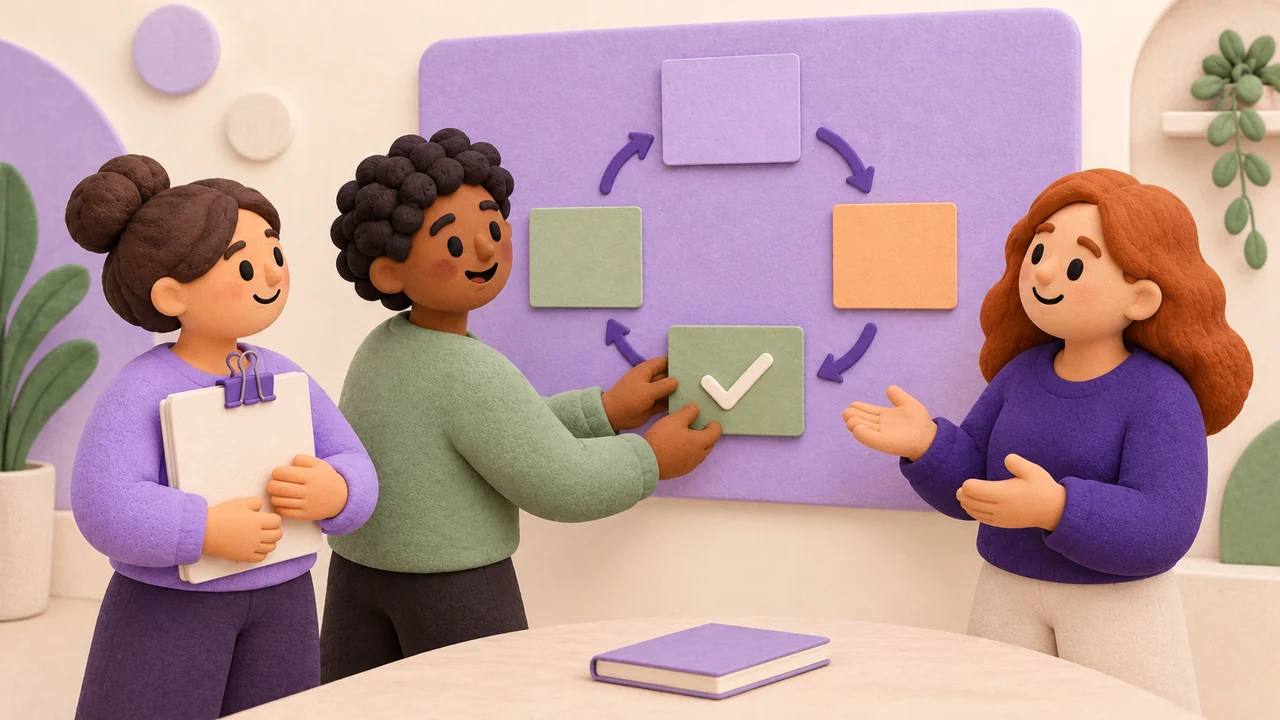
The review team agrees to use a single marked package and send it two working days before the review window. The delivery owner checks the package for version consistency. The reviewer confirms availability before the handoff. The team tests the change on the next two packages.
At the next review, check whether packages arrived in time and whether version questions decreased. If the review still stalls, investigate the new evidence. Perhaps the reviewer needs a clearer decision question. An experiment can be useful even when the first improvement only solves part of the problem.
Make the learning easy to reuse
Write the lesson with its context and limit: a single marked review package helped when several documents depended on the same decision. Include the action and observed result. Avoid a universal claim that one checklist prevents all review delays.
Find a place where future teams will encounter the lesson, such as a handoff template, onboarding guide, or readiness checklist. Review access before sharing sensitive information. The strongest sign of learning is a changed practice and a checked result, not the number of lessons recorded or the length of the meeting.
Your next step
Choose an improvement, give it an owner, and check whether it helped. Preserve enough context for another team to apply the lesson responsibly.
Watch a useful explanation
How to Facilitate the Sprint Retrospective
Practical ways to turn reflection into an improvement to try. Facilitation techniques are optional; the current Scrum Guide defines the purpose of the event.
Watch on YouTube Opens YouTube. No video loads until you choose to visit.Sources and further reading
Use these sources for the full context and current guidance.
- Ken Schwaber and Jeff SutherlandThe Scrum Guide
- Agile Manifesto authorsPrinciples behind the Agile Manifesto
- Project Management InstitutePMI Lexicon of Project Management Terms (registration may be required)